Atomcraft Ores and Smelting — Copper to Steel Guide
Atomcraft ore smelting paths for Cuprite, Cassiterite, Hematite, Bronze, Iron, Steel, Galena lead, glass, and mid-game forge practice.
Atomcraft Ores and Smelting
Smelting is where Atomcraft stops feeling like a digger and starts feeling like a chemist with a furnace. This guide covers the core ore ladder from Cuprite Copper through Steel, plus supporting paths like Galena Lead and sand Glass. Pair it with forge layouts in Builds and drill tiers in Tools.
New players should finish Early Game Materials first. For acids and refractory metals, continue to Rare Elements.
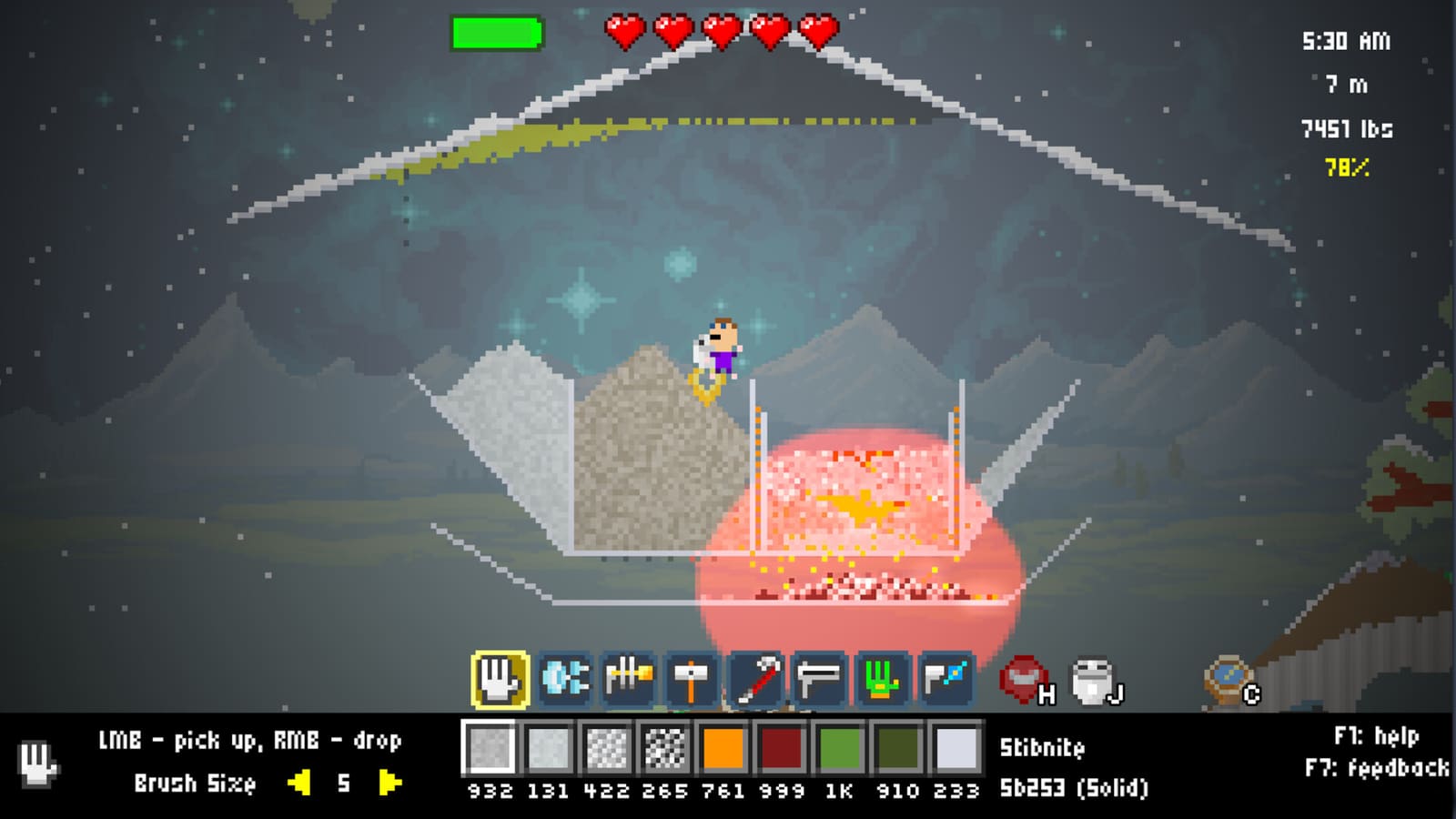
Forge Prerequisites
You need Charcoal fuel, clay containment, airflow, and a Firestarter lineage from Flint/Pyrite. A double-U clay forge concentrates heat under ore without burying the flame. If ceramic conversion starts happening on clay walls, you are in the right temperature band — treat that as feedback, not failure.
Keep ore, fuel, and output separated. Pipette with Left-Ctrl so you do not shovel slag back into the melt. Open F1 Help when the Material Guide lists temperature or source hints you forgot.
Copper from Cuprite
Cuprite is the flagship early ore. Mine it with adequate hardness, haul to the forge, and reduce to Copper. Copper tools and parts unlock deeper stone and faster factory building. Store pure Copper beads away from mixed ash so later Bronze mixes stay clean.
Cuprite veins teach vertical exploration. Follow the ore, timber the shaft, and send Charcoal down in batches. The Map surface and cave articles help you judge when a shaft is wandering off-biome.
Tin from Cassiterite and Bronze
Cassiterite yields Tin. Combine Tin with Copper to form Bronze. Bronze is the mid-game hardness hero: limestone caves, tougher drills, and sturdier machine parts all lean on it. Mentally budget Copper production for both pure Copper uses and Bronze alloying — spending every bead on decorative wiring delays cave entry.
Mix ratios matter in a sandbox. Add Tin deliberately into molten Copper rather than tossing random pixels and hoping. Failed mixes become teaching slag; recycle when possible instead of littering the forge floor.
Iron from Hematite
Hematite is the Iron ore target. Smelt to Iron once your forge and fuel economy can sustain longer heats. Iron expands structural options and prepares the Steel step. Hematite often sits behind hardness gates that Bronze already solved — if the rock laughs at Copper, finish Bronze first.
Iron melts are heavier visually and logistically. Widen forge mouths carefully; splash damage ruins wooden supports. Many players rebuild a dedicated Iron bay beside the Copper bay instead of multiplexing one tiny U forever.
Steel: Carbon in Molten Iron
Steel in Atomcraft is not a menu unlock. Introduce Carbon into molten Iron. Charcoal habits suddenly matter twice: fuel under the forge and carbon chemistry in the melt. Watch the melt; add Carbon with intent; cool into Steel stock for premium drills and load-bearing builds.
If Steel fails, check three causes: Iron was not fully molten, Carbon never contacted the melt, or contamination from leftover Bronze/Copper pixels. Clean basins between campaigns. The Reactions Cheatsheet summarizes the relationship; this page explains why the order matters.
Lead via Galena
Galena opens the Lead path. Lead has niche industrial and chemical uses that show up as you expand automation and specialized reactions. Do not prioritize Galena over Hematite if your Walkthrough still demands Steel tools, but mark Galena finds for a return trip.
Glass from Sand
Melt sand to make Glass. Glass supports clearer builds, vessels, and factory visibility. It is an excellent side project during Charcoal surplus nights when you are not ready for rare acids. Keep sand dry and sorted; muddy mixtures waste heat.
Mid-Game Ore Notes
While Steel stabilizes your kit, begin scouting:
- Sylvanite for Silver/Gold (details in rare page).
- Cobaltite for Cobalt.
- Sphalerite for Germanium when mined.
- Coal-adjacent Mercury.
- Cave Rubies once limestone opens.
These are not all full smelting chapters yet, but ore awareness prevents deleting a rare vein while strip-mining for Hematite. Pin selectively; too many pins create sparkle noise.
Smelting Workflow Template
- Confirm drill hardness for the ore (Tools).
- Stock Charcoal and repair forge geometry (Builds).
- Pin the ore; dig a safe shaft (Map).
- Haul sorted ore only — leave dirt piles underground.
- Heat, reduce, alloy, or carbonize as required.
- Cool, store, contribute new elements to the ship.
- Update notes and move to the next Walkthrough gate.
Quality Control Habits
Label storage rows: Cuprite, Copper, Cassiterite, Tin, Bronze, Hematite, Iron, Steel, sand, Glass. Use controller D-pad material slots or keyboard hotkeys from Controls so swaps mid-forge stay fast. Never AFK a maxed charcoal blaze beside a wooden warehouse.
When automation arrives — conveyors, sensors, electrodes — smelt bays become modules. Design them clean now so later wiring in Builds does not fight leftover slag topography.
Cross-Links
- Early Game Materials — charcoal and Cuprite onboarding.
- Rare Elements — HF, Al, Ta/Nb, nobles.
- Reactions Cheatsheet — compact recipes.
- Guides — steel and forge tutorials in how-to form.
- Materials Hub — full directory.
Master Copper, Bronze, Iron, and Steel before obsessing over Chromium or Tantalum. Atomcraft ores reward sequential competence.
Frequently Asked Questions
Quick answers tied to this page.
How do I make Bronze in Atomcraft?
Smelt Copper from Cuprite and Tin from Cassiterite, then combine them into Bronze for mid-tier hardness tools.
How is Steel made in Atomcraft?
Add Carbon to molten Iron. Charcoal-related carbon feedstock and a fully molten Iron bath are both required.
Which ore gives Iron?
Hematite. Mine it with sufficient drill hardness, then smelt in a stable charcoal-fueled forge.
How do I make Glass?
Melt sand in a hot forge pocket. Keep sand sorted and avoid muddy contaminated batches.
What ore starts the Lead path?
Galena. Mark it when found, but prioritize Copper–Bronze–Iron–Steel if your tools still bounce off rock.
Why did my smelt fail?
Common causes are low heat, smothered airflow, wrong ore, or contamination. Rebuild forge geometry and retry with sorted feedstock.