How to Make Steel in Atomcraft
From Cuprite and cassiterite to Iron, Carbon, and Steel
How to Make Steel in Atomcraft
Steel is a flagship mid-game product in Atomcraft: harder tools, stronger builds, and ship-relevant discoveries all ride on getting Iron hot enough and introducing Carbon correctly. This guide walks the full metal ladder—Cuprite → Copper, Cassiterite → Tin, Bronze = Copper + Tin, Hematite → Iron, then Carbon into molten Iron → Steel—with forge practice and drill gates. Start from the Guides hub or the forge building guide if your hearth is not ready.
Requirements before the steel attempt
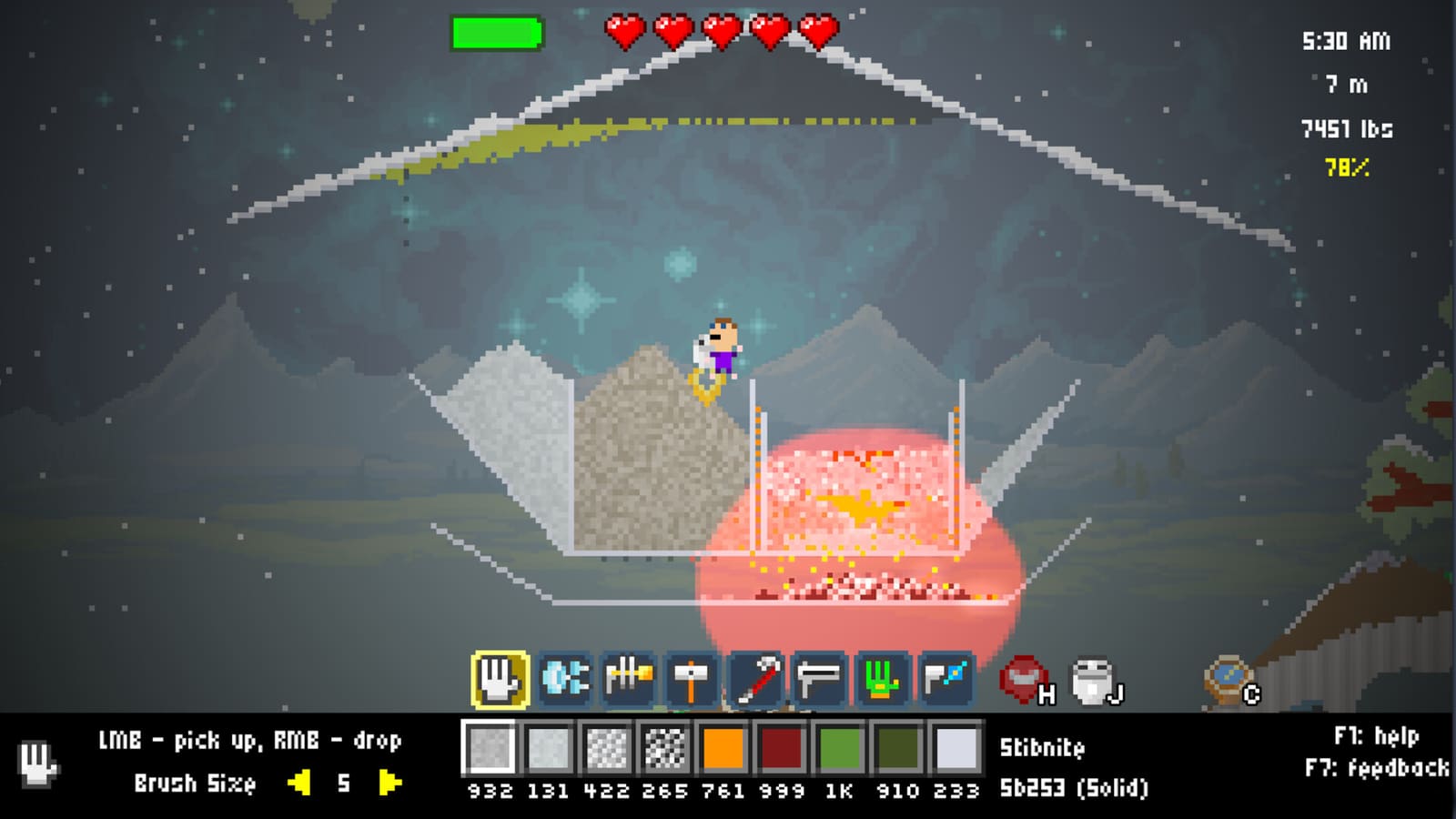
- Reliable charcoal from wood chip burns (pile chips, ignite, recover inner charcoal).
- Double clay U-shape forge with charcoal in the bottom chamber.
- Left-Ctrl pixel selection for clean transfers.
- Drill progression at least to Copper, because Copper drills mine cassiterite for Tin.
- Material Guide tracking on Hematite and any Carbon sources you still lack.
- Optional but wise: ship courier samples so each new metal also pays Research Points (Research Points guide).
Step 1 — Copper from Cuprite
Mine Cuprite with your current digger, load it into a hot forge, and smelt Cuprite → Copper. Maintain charcoal heat; extract Copper with Left-Ctrl if ash mixes in. Turn Copper into better tools, especially the Copper drill, which is the cassiterite gate.
Copper is also a restoration candidate—deliver a sample to the spaceship when you first stabilize production (spaceship repair).
Step 2 — Tin from Cassiterite
With a Copper drill, mine cassiterite and smelt Cassiterite → Tin. Tin alone is useful; combined with Copper it becomes the alloy rung that bridges early and mid metals. Track cassiterite with the eye button so you are not guessing vein colors in the dark—use F for flashlight in caves.
Step 3 — Bronze from Copper and Tin
Combine Copper + Tin to produce Bronze. Bronze improves tooling and structural options before Iron is stable. Practically, keep separate bins: Copper stock, Tin stock, Bronze products. Alloy work in a pixel chemistry game punishes messy piles; Left-Ctrl is mandatory when leftover Tin sits beside Bronze.
Step 4 — Iron from Hematite
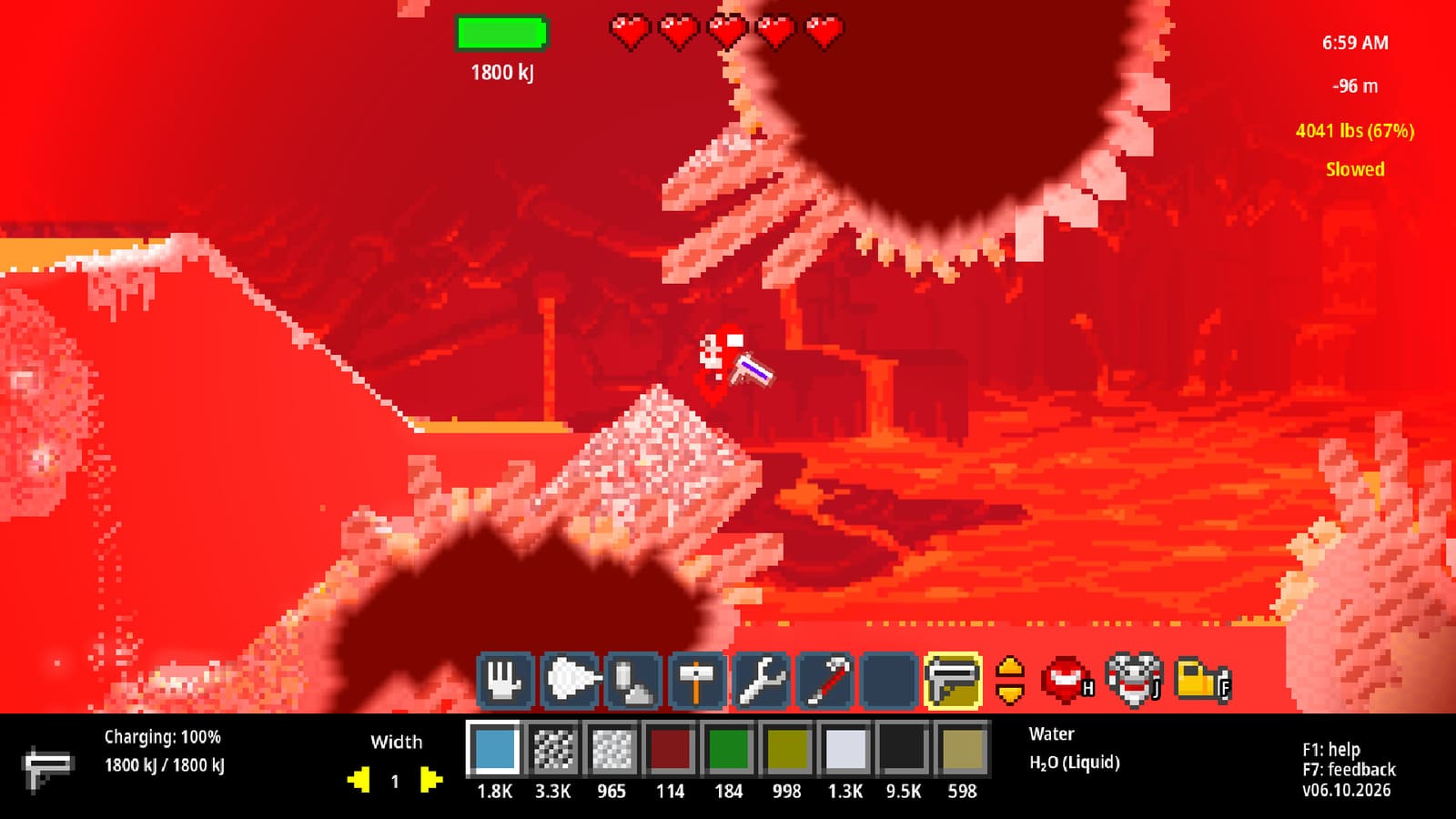
Locate and mine Hematite, then smelt Hematite → Iron. Iron melts and handling are less forgiving than Copper; keep clay walls intact and charcoal topped up. If Iron production fails, debug forge geometry and fuel using the forge guide before assuming the ore is wrong. F1 Help can confirm pixel identities when similar dark materials confuse you.
Iron discoveries are high value for Research Points—restore before converting your entire stash into experiments.
Step 5 — Steel from Carbon and molten Iron
Steel requires Carbon introduced into molten Iron. Get Iron fully molten in the forge environment, then add Carbon so the reaction produces Steel. Timing matters: Carbon into cold Iron will not behave like Carbon into a molten mass. Prepare Carbon ahead of the melt so you are not scrambling through inventories while temperature collapses.
After the reaction, pick Steel pixels deliberately. Contaminated Steel trains bad habits into later automation recipes.
Drill and tool pacing around the ladder
| Goal | Dig / process gate |
|---|---|
| First metals | Plastic/Wood drills, Cuprite access |
| Tin | Copper drill → cassiterite |
| Iron | Hematite with sufficient dig tier |
| Steel | Molten Iron + Carbon in forge |
Do not rush Steel lore while still on a Wood drill. The chemistry is ready when the logistics—ore, charcoal, Carbon—are ready.
Integrating steel with the rest of Atomcraft
Steel tools accelerate everything else: deeper ores for more Research Points, tougher machine frames for automation, and safer clears toward seawater setups for electrolysis. Cooking stays relevant because steel projects are long—keep meals ready with How to Cook Food in Atomcraft. Beginners who skipped fundamentals should still skim How to Play Atomcraft.
Production tips for repeat Steel batches
- Run charcoal pits in parallel with the forge so fuel never dips mid-molten phase.
- Pre-stage Hematite and Carbon in labeled piles beside the hearth.
- Smelt Iron in predictable batch sizes you can fully melt before adding Carbon.
- Store Steel away from raw Iron to avoid visual mix-ups.
- After first Steel, restore the discovery on the ship, then decide how much goes to tools versus stockpile.
- Leave corridor space for future conveyors feeding Hematite and exporting Steel.
Troubleshooting the metal chain
No cassiterite — Confirm you are using a Copper drill, not merely holding Copper metal.
Bronze will not form — Verify both Copper and Tin pixels are present and actually combining; separate binders of slag.
Iron never appears — Recheck Hematite identity in the Material Guide and forge heat.
Steel fails — Iron may not be molten, Carbon may be missing, or charcoal heat collapsed. Reheat and retry with staged Carbon.
Ran out of samples for the ship — Restart a small discovery batch before mass-converting into tools.
End-of-guide checklist
- Cuprite → Copper stable; Copper drill crafted.
- Cassiterite → Tin stable; Bronze crafted at least once.
- Hematite → Iron stable.
- Carbon + molten Iron → Steel succeeded.
- Samples restored for Research Points where applicable.
- Next goals: automate ore feed or push electrolysis unlocks.
Making Steel in Atomcraft is less a single recipe and more a campaign across dig tiers and forge skill. Clear each rung—Copper, Tin, Bronze, Iron—then treat the Carbon-in-molten-Iron step as a controlled experiment you can repeat on demand.
Frequently Asked Questions
Quick answers tied to this page.
How do you make steel in Atomcraft?
Smelt Hematite into Iron, get the Iron molten in a charcoal-fueled forge, then add Carbon into the molten Iron to produce Steel.
What metals come before steel in Atomcraft?
Cuprite becomes Copper, cassiterite becomes Tin, Copper plus Tin makes Bronze, and Hematite becomes Iron before the final Steel step.
Why can I not mine cassiterite yet?
You need a Copper drill. Copper drills are the tier that mines cassiterite for Tin production.
Do I need a special forge for steel?
Use a proper double clay U-shape forge with charcoal in the bottom chamber and enough heat to keep Iron molten when Carbon is added.
Should I restore Steel on the spaceship?
Yes—when Steel is a new discovery, restore it for Research Points before spending every pixel on tools.