Atomcraft Materials Hub — Elements, Ores, and Reactions
Browse Atomcraft material guides: early resources, ore smelting paths, rare elements, and reaction cheatsheets for Triplejump chemistry sandbox.
Atomcraft Materials Hub
Atomcraft by Triplejump treats every pixel as a physical and chemical actor. Digging is not a loot table; it is mining geology. Smelting is not a craft menu; it is heat, fuel, and oxygen meeting ore. This Materials hub is the index for how those systems connect from your first Wood pile to late-game noble gases and refractory metals.
If you are brand new, start with Early Game Materials after skimming How to Play. Veterans chasing Research Points and ship repairs should jump to Rare Elements and the Reactions Cheatsheet, then wire production with Builds and Tools.
What Materials Mean in Atomcraft
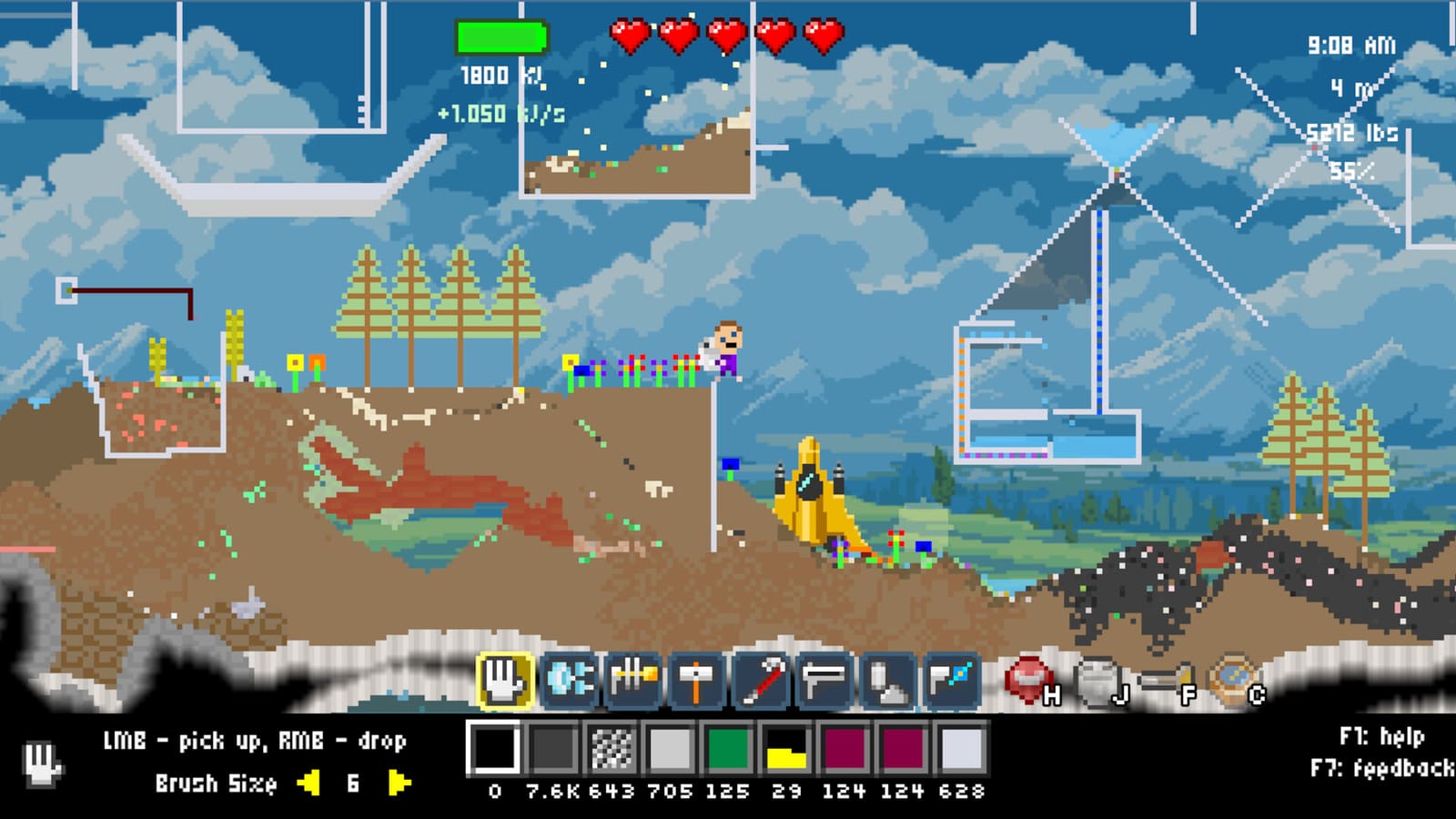
Unlike inventory RPGs, Atomcraft materials exist as world pixels. Wood sits on trees until you cut it. Cuprite veins stay in stone until a drill of sufficient hardness bites them. Liquids flow, acids etch, molten metals cool into solids, and vapors escape if you leave a forge open. Learning materials means learning where they spawn, how they transform, and what tool hardness or temperature unlocks the next tier.
The in-game Material Guide (open with F1, then pin items) and Left-Ctrl pipette selection are your best friends. Pipette a pixel in the world to select that material for placement or tracking. Pinning a target makes deposits sparkle through fog of war so you stop wandering blind.
Hub Directory
Use these pages as a progression ladder:
- Materials Overview — how the chemistry sandbox organizes sources, hardness, and discovery.
- Early Game Materials — Wood, Flint, Pyrite, Firestarter, Charcoal, and the first copper climb.
- Ores and Smelting — Cuprite, Cassiterite, Hematite, Bronze, Iron, Steel, and glass.
- Rare Elements — HF pathways, Al, Ta/Nb, noble gases, lithium, and deep-tech minerals.
- Reactions Cheatsheet — quick recipes for acids, alloys, and industrial reductions.
Pair materials reading with Walkthrough stages, Map biome notes, and Controls so Left-Ctrl and tool slots stay muscle memory while you dig.
Progression Snapshot
| Stage | Key materials | Why it matters |
|---|---|---|
| Surface survival | Wood, Flint, Pyrite, Charcoal | Firestarter, cooking heat, first forge fuel |
| Soft metals | Cuprite → Copper, Cassiterite → Tin | Bronze tools and mid drills |
| Iron age | Hematite → Iron → Steel | Harder drills, structural builds |
| Acids and etch | Sulfur, Water, Fluorite | Sulfuric Acid, HF for refractory ores |
| Deep tech | Bauxite, Columbite, Cooling arrays | Aluminum, Ta/Nb, noble gases |
Copper from Cuprite and Tin from Cassiterite combine into Bronze. Iron comes from Hematite; dissolve Carbon into molten Iron for Steel. Sulfuric Acid is Sulfur plus Water; HF needs Sulfuric Acid on Fluorite. Lead follows Galena; Silver and Gold ride Sylvanite. Rubies appear in limestone caves. Cobaltite yields Cobalt. Chromite becomes Ferrochrome, then Chromium with Aluminum. Bauxite → Alumina → carbon reduction near 2300 K for Aluminum. Columbite plus HF opens Tantalum and Niobium. Vanadinite covers Vanadium. Mine Sphalerite for Germanium. Sand plus Carbon at 2500–3000 K makes Silicon. Mercury clusters near coal. Melt sand for Glass. Find Borax in the Buried City. Lepidolite starts the Lithium path. Noble gases come from Cooling Element structures rather than random surface pickups.
How to Use This Hub Efficiently
Treat each materials page as a mission briefing, not a textbook. Before a dig session, open one target page, pin the ore in-game, and decide which forge design from Builds and drill tier from Tools you will carry. After the session, check the Reactions Cheatsheet if a melt failed or an acid did nothing — temperature, containment, and reagent purity fail more often than a wrong ore name.
When a Walkthrough chapter asks for a new element contribution to the spaceship, return here first. Contribute pixels only after you understand the isolation step; dumping mixed slag into ship sockets wastes rare feedstock. Cross-check cave and Buried City landmarks on the Map so you are not digging limestone for Borax or hunting Sylvanite on empty grassland.
Safety, Automation, and Cross-Links
Dangerous chemistry belongs behind sensors and doors. Read safe reaction patterns in Builds before scaling Nitro-class recipes. Cooling arrays that harvest noble gases double as factory temperature control. For keyboard and controller material slots, see Controls and the hotkeys page under that section.
Interactive helpers on the Tools pages can speed lookup once you know the names above. The Guides section covers forge construction, steelmaking, electrolysis, and ship repair in tutorial form; Materials pages stay focused on sources and transformations.
Discovery Mindset
Atomcraft rewards deliberate note-taking. When you discover an element, contribute it toward Research Points on the crashed ship, then unlock mechanical pixels that automate conveyors, electrodes, and blenders. Materials knowledge compounds: the charcoal habit you learn on day one still fuels late forges; the HF caution you learn mid-game protects every Columbite run afterward.
Explore limestone caves for Rubies and deeper ore grades, surface veins for Cuprite and Hematite, coal-adjacent pockets for Mercury, and Buried City ruins for Borax. Use the Map articles to plan routes instead of tunneling randomly until your plastic drill fails.
Related Sections
- Guides — step-by-step how-tos for forge, steel, and ship systems.
- Builds — forge geometry, wiring, cooling, safe chemistry.
- Walkthrough — staged progression through surface, caves, and city.
- Tools — drill tiers and lookup helpers.
- Controls — WASD, Left-Ctrl pipette, controller material slots.
- Map — biomes and landmark orientation.
Return to this hub whenever a recipe stalls. The answer is usually a missing intermediate — Charcoal, Bronze hardness, HF, or a hotter reduction — not a missing craft button.
Frequently Asked Questions
Quick answers tied to this page.
Where should I start in the Atomcraft Materials hub?
Read Materials Overview, then Early Game Materials for Wood, Firestarter, Charcoal, and Cuprite before chasing rare elements.
How do I select a material quickly in Atomcraft?
Hold Left-Ctrl to pipette a world pixel into your material selection, or use the Material Guide from the F1 Help System and pin tracking sparkles.
What is the basic metal ladder in Atomcraft?
Copper from Cuprite, Tin from Cassiterite into Bronze, Iron from Hematite, then Steel by adding Carbon to molten Iron.
Where do noble gases come from in Atomcraft?
Build and run Cooling Element structures; noble gases are harvested through cooling arrays rather than casual surface mining.
Which wiki sections pair with Materials?
Cross-check Guides for tutorials, Builds for forge and automation layouts, Tools for drills, Map for biomes, and Walkthrough for stage goals.