Atomcraft Forge Designs: Double-U Clay Layouts That Stay Hot
Build the Atomcraft double-U clay forge, manage charcoal heat, melt Cuprite safely, and scale forge designs toward alloys and Buried City ores.
The Atomcraft forge is the first machine that feels like real chemistry engineering. A correct layout turns trees into charcoal, charcoal into sustained heat, and Cuprite into molten copper without snuffing the fire. This page focuses on the proven double-U clay forge and the habits that keep Atomcraft smelting predictable.
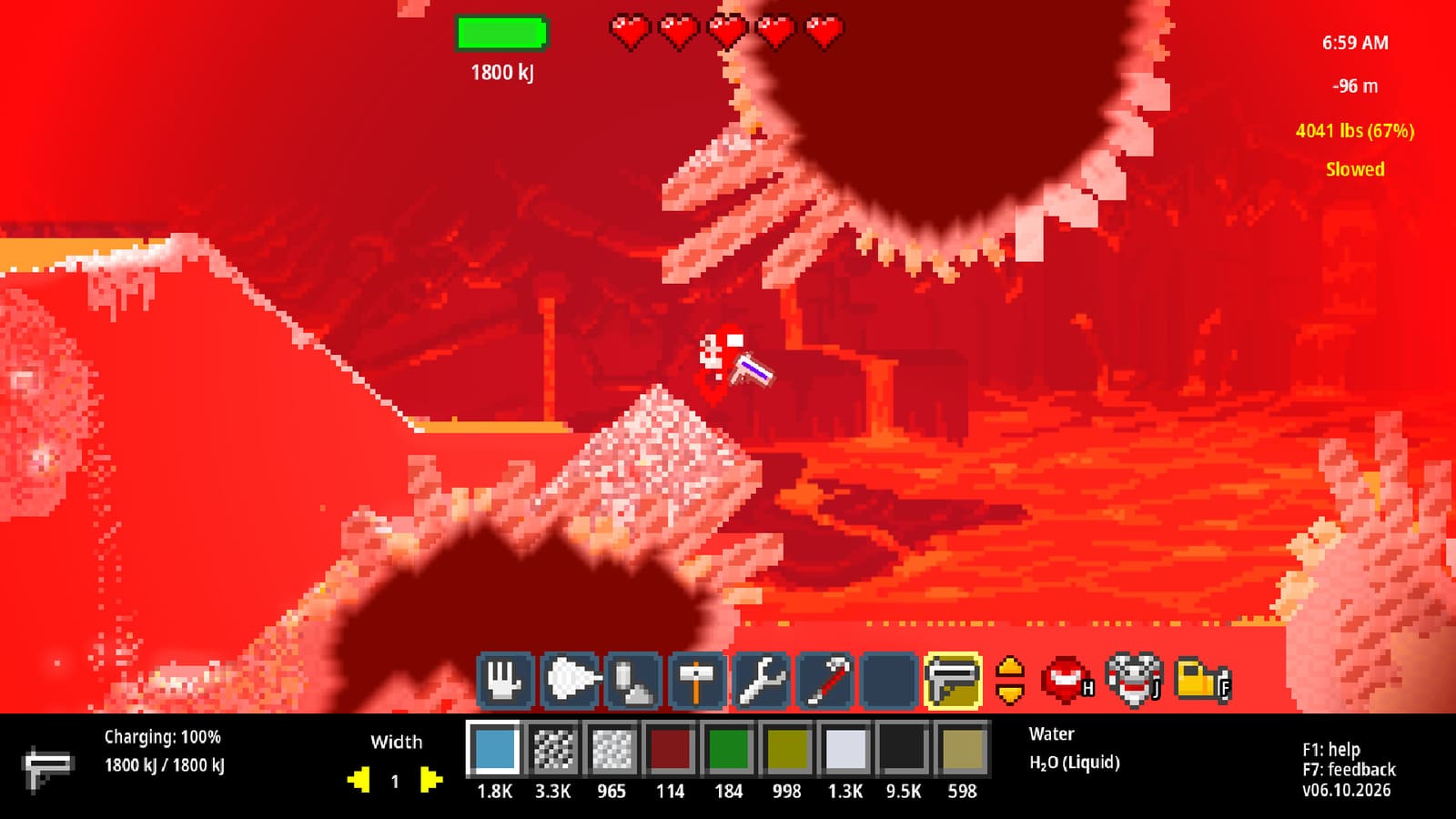
Why the double-U shape wins in Atomcraft
A single clay bowl often fails: ore falls into the flame, smothers oxygen pathways, or ignites when you wanted melt, not ash. The Atomcraft community pattern is a clay U inside another clay U. Charcoal lives in the lower U. Ore and alloys sit in the upper U. Heat rises through the clay channel while solids stay separated.
Clay pixels that endure forge temperatures gradually turn toward white ceramic. In Atomcraft, that visual change is your durability meter. A white-hardened forge wall is less likely to deform during long copper runs.
Materials you need before forging
- Clay for the nested U walls.
- Wood from trees or the starter pile, drilled into chips.
- Charcoal produced by packing wood chips and lighting them so inner pixels convert without total burn-off.
- Cuprite or other early ores for copper.
- A Firestarter and preferably Left-Ctrl style pixel picking so you grab only charcoal, not ash.
Confirm hardness and dig tools on the Atomcraft tools overview and drill tiers. Surface Plastic drills will not carry you into limestone; plan Wood then Copper.
Step-by-step Atomcraft double-U forge
- Flatten a safe platform away from your ship living space.
- Dig or place the outer clay U with thick sidewalls.
- Place the inner clay U so a gap remains for charcoal in the lower channel.
- Pack charcoal into the lower U; keep a refill pile nearby.
- Load ore into the upper U; avoid dumping solids onto the charcoal bed.
- Ignite charcoal carefully; watch heat climb into the ore channel.
- Scoop molten product when chemistry finishes; store slag separately.
- Top up charcoal before the bed collapses into cold ash.
Video: Atomcraft forge in motion
The mid-page video below shows forge heat and material flow in Atomcraft. Pause when charcoal placement and nested clay walls are on screen, then mirror those proportions in your world.
Charcoal discipline
Atomcraft charcoal is not infinite decoration. Drill trees, pile chips, and fire the pile so interior wood converts while exterior flames die under coverage. Holding the pixel-select modifier lets you harvest charcoal without grabbing every neighboring ash pixel. Keep charcoal production beside the forge so jetpack trips stay short.
If charcoal supply lags, the forge cools mid-melt and you waste Cuprite time. If charcoal overfills into the ore channel, you contaminate alloys. Treat charcoal like a metered fuel rail, not a dump pile.
Scaling the Atomcraft forge
Once copper is stable, widen the upper U or add a parallel forge bay rather than deepening a single chaotic pit. Parallel Atomcraft forges let you smelt copper in one bay while experimenting with alloys in another. Leave jetpack airspace between bays so you can escape bats without diving through molten copper.
For limestone-cave reagents and later Buried City ores such as Lepidolite, Borax, Pyrolusite, and Columbite, the same heat-separation principle applies. Some recipes prefer charcoal heat over coal so acids do not evaporate too quickly. Pair this page with cooling and noble gases when temperatures climb past early copper needs.
Common Atomcraft forge failures
- Smothered fire: ore dropped into charcoal. Rebuild separation.
- Runaway surface fire: wood chips left uncontained near living quarters.
- Cold forge: charcoal bed too thin or walls too open to wind-like pixel flow.
- Wrong drill tier: you can melt copper but cannot mine the next ore hardness.
- No Material Tracking: scarce Cuprite veins are easier with sparkles enabled.
Forge adjacency and base planning
Place forges downwind of storage if your Atomcraft map has prevailing particle drift. Keep ship restoration crates far from open flame. Diatomic element forms still count toward ship restoration, so label storage carefully and do not incinerate rare gases while chasing metal melts.
Cross-link your forge plan with the materials hub, early-game walkthrough, controls, and map biomes. Atomcraft forges are the bridge between digging and research.
Quality checklist
- Nested U geometry is visible from a side view.
- Charcoal refill path does not cross the ore trough.
- Clay walls show heat hardening after a long run.
- Molten copper has a scoop lane that does not dump into camp.
- A second forge bay is sketched before Buried City ores arrive.
Master the Atomcraft double-U once, and every later machine becomes easier. Heat separation is the same idea behind safe blenders and cooling jackets: give each chemical job its own lane.
Frequently Asked Questions
Quick answers tied to this page.
What is the best starter Atomcraft forge?
A double-U clay forge with charcoal in the lower channel and ore in the upper channel keeps heat flowing without smothering the fire.
How do I make charcoal in Atomcraft?
Drill wood chips into a dense pile, ignite it, and harvest the converted interior charcoal pixels, preferably with pixel-type selection.
Why did my Atomcraft forge go cold?
Usually the charcoal bed ran out, walls were too thin, or ore fell into the fuel channel and smothered combustion.
Can one Atomcraft forge handle Buried City ores?
The same heat-separation idea works, but you often need thicker clay, better cooling, and parallel bays for acids and high-temperature mixes.
Does forge work help ship Research Points?
Indirectly. Forges produce metals and reagents you need to restore ship elements, which award Research Points for mechanical unlocks.